Haunted Ohio-Conkle's Hollow
Conkle's
Hollow is under the direction of Ohio Division of Natural Areas and
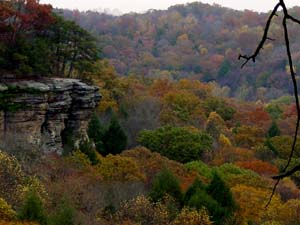
Preservers. The area is well known for its unique rock formations,
high cliff overlooks and dotting of recess caves.
In the 1790’s, the
Hocking Valley was much different than it is today. There is an old saying
. . . “a squirrel could start in West Virginia and make its way from tree
top to tree top without ever touching the ground all the way across Ohio to
Indiana.” Although it would have been quite an amazing squirrel to travel
so far, it is a good illustration of the vast and ancient forest covering
the majority of what was to become Ohio in a few years.
This is the region a man
by the name of William Conkle traveled to in the name of exploration and
discovery. He came to trade with the native Shawnee and Wyandot and fell in
love with this vast wilderness. Along with a beautiful and mysterious
forest, there were animals such as bear (both black and grizzly), bobcat,
elk, bison, and even a melanistic (all black) version of the mountain lion.
Life in the wilderness of the old northwest was hard. However, it was a
great adventure and the few settlers making it to this country poured their
heart and soul into every part of their life. In William’s travels,
he fell in love with a windy, steep sided hollow and even took the time to
carve his name in the wall for future adventurers to find.
It is said his love was
even strong enough to pass the shrouded veil of death. How he passed is
still not clear but it does not appear to be by any nefarious means. It is
said his spirit still roams the hollow that bares his name. His ghost is
said to watch over the hollow and he can appear as a friendly spirit
watching from the trailside in his early 1790’s dress or a voice of
reprimand to those who would do his home harm.
A few years after
William’s death, life began to get a little tougher here in the Hocking
Valley. The settlers began to pour in from the far side of the Appalachian
Mountains. The land the Native Americans freely roamed was becoming cramped
with too many people. Leaving their homes was not a realistic option for the
Shawnee, Wyandot or Delaware - there really was no friendly territory to the
west was not already occupied.
As their homeland
became fuller and fuller, everyday life became harder and harder. The
people became much more desperate. A small band of three Shawnee made their
way down to the Ohio River and actually boarded and raided the settlers
traveling down the river in a paddle boat to their new homes. They
collected a good amount of silver and other treasures in which they made off
into the dark forest of hills of southeast Ohio. They were not the first to
raid passing boats and the settlers decided to follow this small band and
apprehend the desperate natives and their ill-gained booty.
The posse chased the
natives for over two days right into the Hocking region and right into the
dead-end walls of Conkle’s Hollow. In desperation they came up with a plan
to hide their loot high up into a small “hominy hole.” They had to cut over
a Hemlock tree to lean against the high cliff wall to climb up to their
lofty perch and hide the treasure into tiny recess. They then climbed down
and pushed over the tree to complete their hiding place. The idea was to
return later, chop another tree to lean against the wall and retrieve their
stolen silver. Unfortunately for this small band, they were captured just
outside of Conkle’s Hollow and were hanged for their offenses before they
could tell were they hid the loot.
It should still be
there…somewhere. It is said that these same native Shawnee defend their
treasure with ferocity. If they can’t have it…none shall. You can still
here their shouts and chants within the narrow hollow walls, and if you get
on the track of the loot they will appear to change your mind.
A little more time went
by and the Southeastern region became populated and most of the settlers had
begun to clear the forest and make a rather ragged attempt to farm the hill
country. Then the War of 1812 broke out and the need for iron & gunpowder
became a high priority as trade for European gunpowder became almost
impossible. The Appalachian Hills may not be good for traditional farming
but they did have all the ingredients for iron and gunpowder. Just down the
road from Conkle’s Hollow is a second preserve known as Saltpeter Cave. The
name tells it all. This deep recess cave has a large deposit of saltpeter,
a prime key ingredient to gunpowder. Production went into high gear and 20
Native American slaves were brought in to help mine the precious mineral
from the cave. Work continued at a furious pace and safety regulations were
still far into the future. What happened next was almost inevitable. A
large section of the roof gave way and crushed to death over half of the
native workers. Their screams and sad spirits still roam the valley.
|